Mostrando postagens com marcador Relatos. Mostrar todas as postagens

23.8.10

Pelourinho - Balanço do dia: Foi um dia estranho!! Não foi ruim, mas estranho

1) Conhecemos uma parte do Pelourinho e percebemos o quanto as pessoas gostam de abordar os turistas com a desculpa de “presentear”, “contemplar” com uma fitinha do Nosso Senhor do Bonfim. E aqui, uma informação de utilidade pública a quem interessar possa: NÃO ACEITEM E CASO COMPREM, NÃO COLOQUEM A FITINHA NO BRAÇO ENQUANTO ESTIVEREM EM SALVADOR!!! Segundo informações de quem mora, trabalha e conhece tudo por lá isto é para marcar o turista para ser assaltado depois. E isto nos foi dito por MAIS de uma pessoa.


Leia a seqüência do texto no Blog:
 http://luadvog70.blogspot.com/
aqui:
http://luadvog70.blogspot.com/2010/08/relato-de-viagem-salvador-e-morro-de_23.html

26.10.09

Camafeu também do Pelourinho


Camafeu de Oxossi


Solista de berimbau, cantor. Ápio Patrocínio da Conceição, andarilho do Pelourinho, é um homem de sorte. Tanto no jogo, quanto no amor, daí o nome Camafeu. Ele nasceu no dia 04 de outubro de 1915, no bairro do Gravatá, em Salvador, e se criou no Pelourinho. Filho de Faustino José do Patrocínio e Maria Firmina da Conceição. Seu pai era mestre-pedreiro, descendente de africano. Conviveu com ele até os sete anos. Sua mãe veio de Camamu, era negociante de tabuleiro. Negociava frutas, doces, acarajé, tudo na Baixa dos Sapateiros. Sua mãe teve 16 filhos. Ele, Raimundo e João, cada um de um pai. Como ficou órfão de pai aos sete anos, seu padrasto dava mais atenção ao Raimundo. Não suportando aquilo, resolveu sair de casa. De menino de rua que passou fome e perdeu toda a família, estudou na Escola de Aprendiz de Artífice, trabalhando na fundição, vendeu cordão de sapato (cadarço) na porta do Elevador Lacerda. Dali passou para o passeio do Mercado Modelo como engraxate, além de vender os jornais de modinha nas feiras de Água de Meninos, Dois de Julho e Sete Portas. Saiu de lá para ser marítimo e foi parar na Estiva - Companhia Docas da Bahia até se tornar proprietário da famosa barraca de São Jorge, no velho Mercado Modelo, e de um restaurante de fama internacional.


A música entrou em sua vida desde garoto. Foi criado na roda de samba, tocando berimbau, ensinando aos turistas como tocar o instrumento. Era um homem de muitas palavras, casos e lendas para contar. Chegou a ser diretor das escolas de samba Só Falta Você, Deixa Pra Lá, Gato Preto, onde aproveitava para cantar seus sambas. No Mercado Modelo ele começou a cantar música de capoeira e ijexá, tocando berimbau e atraindo a clientela. A partir daí começou a fazer sucesso. Na sua Barraca São Jorge, aberto em riso, cercado de objetos rituais de obis e orobôs, ele ensinava os mistérios da Bahia. Na década de 60, a Universidade Federal da Bahia criou o curso de língua ioruba e Camafeu foi um dos primeiros alunos. Foi convidado para ir à África, representando a Bahia no Primeiro Festival de Arte Negra do Senegal, junto com Pastinha e outras pessoas. Lá ele cantou em iorubá para Oxum e para Oxómi. Sobrinho de Mãe Aninha e filho-de-santo de Mãe Senhora, o obá de Xangó do terreiro Axé Opô Afonjá esbanjou alegria. Figura baiana conhecida em todo o Brasil, personagens de muitos livros de Jorge Amado (Tereza Batista, Dona Flor, Tenda dos Milagres, Tieta do Agreste, entre outros) de quem era amigo particular. Seu nome está presente em dezenas de músicas: aquela que diz “Camafeu, cadê Maria de São Pedro”, gravada por Martinho da Vila, outra gravada por Maria Alcina e também o conjunto Os Originais do Samba gravou um samba em sua homenagem.

Tocador de berimbau, batuqueiro, ex-presidente dos Filhos de Gandhi, Camafeu de Oxossi gravou dois discos, um deles Berimbau da Bahia com os cantos de capoeira mais belos, alguns velhos do tempo da escravidão ou da Guerra do Paraguai: “Volta do mundo, ê!/volta do mungo, ah!/ Eu estava lá em casa/sem pensá, sem maginá/e viero me buscá/para ajudar a vencê/a guerra do Paraguá/camarado ê/camaradinho/camarado...”. Esses cantos estão cheios de lembranças da vida dos escravos: “No tempo em que eu tinha dinheiro, camarado ê, comia na mesa com ioiô, deitava na cama com iaiá... Depois que dinheiro acabou, mulher que chega prá lá, camarado. camaradinho ê....”. Contam da guerra, da escravidão, das lutas dos negros. Outros são improvisados no repente da brincadeira e, repetidos, permanecem e se tornam clássicos: “Bahia, minha Bahia,/Bahia do Salvador,/Quem não conhece capoeira/Não lhe pode dar valor//Todos podem aprender/General e até doutor”. Com o tempo, a voz rouca não cantava mais, porém se emprestava a histórias e nomes com quem conviveu numa cidade que não existe mais.


“No mercado, em meio a seus orixás, aos colares e às figas, queimando o incenso purificador, rindo sua gargalhada, saudando São Jorge. Oxóssi, rei de Ketu, o grande caçador. Camafeu comanda a música, o canto e a dança. Um baiano dos mais autênticos, um dos guardiães da cultura popular. Homem que possui o saber do povo, um desses que preservam o passado e constróem o futuro”, segundo Jorge Amado no livro Bahia de Todos os Santos. E diz mais: “Compositor, mestre solista de berimbau, obá de Xangô, Osi Obá Aresá, filho de Oxóssi, preferido de Senhora, amigo de Menininha e de Olga de Alaketu, o riso cortando o rosto, dono da amizade. Em sua barraca, em prosa sem compromisso, numa conversa largada como só na Bahia ainda existe, sem horário e sem obrigações temáticas, podem ser vistos o pescador, a filha-de-santo, o pintor Carybé, o passista de afoxé, o Governador do Estado, o compositor Caymmi, a turista loira e esnobe, a mulata mais sestrosa e Pierre Verger, carregado de saber e de mistério. A barraca de Camafeu é ponto de reunião, é mesa de debates, é conservatório de música. Na cidade do Salvador a cultura nasce, se forma e se afirma em bem estranhos lugares, como por exemplo, uma barraca do mercado (...) lá se vai Camafeu pelos caminhos da Bahia, invencível com seu santo guerreiro. Vir à Bahia e não ver Camafeu é perder o melhor da viagem. Ele é um obá, um chefe, um mestre”.

Um ritual religioso marcou no dia 27 de março de 1994 o sepultamento de uma das figuras mais conhecidas da Bahia: Apio Patrocínio da Silva, o Camafeu de Oxossi. O enterro foi no Cemitério da Ordem Terceira do São Francisco, e contou com a presença de vários amigos e admiradores daquele que era uma das maiores autoridades do culto afro-brasileiro na Bahia. Camafeu ficou conhecido não só como proprietário de um dos mais famosos restaurantes de comidas típicas da Bahia, localizado no Mercado Modelo, como também pelo posto Obá de Xangô, que ocupava no Terreiro Ilê Axe Opô Afonjá. Era querido pelas principais mães-de-santo da Bahia e amigo de Dorival Caymmi, Jorge Amado e Gilberto Gil. Doente há muito tempo, Camafeu foi vencido por um câncer na garganta e faleceu no Hospital Aristides Maltez, aos 78 anos.

Looking for Brazil


Afro-Brasil

October 24, 2009 by mceakin
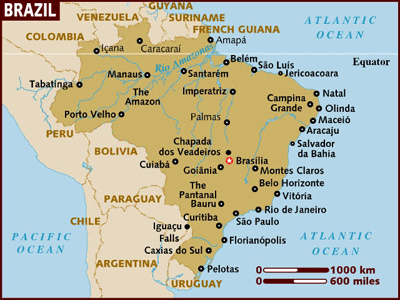
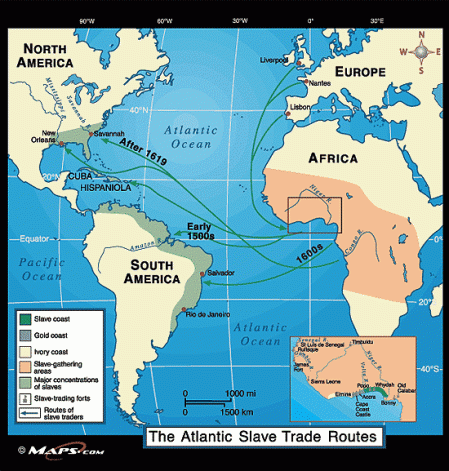
For the past three days I have been in Salvador da Bahia, the old colonial capital of Brazil, and the birthplace of the slave and sugar plantation complex that spread across tropical and subtropical America from the sixteenth to the nineteenth centuries.  It was here in Salvador da Bahia de Todos os Santos (The Savior of the Bay of All Saints) that the Portuguese transplanted cane sugar from their tiny island possessions off the African coast (Madeira in particular) in the late sixteenth century and began to transport black Africans to work on the expanding plantations on the Brazilian coast.  From the 1570s to the 1660s, the northeastern coast of Brazil became the first great sugar plantation of the world driving the rise of the modern transatlantic slave trade, and making sugar a standard part of the diet of the European world.  After 1650, the Dutch, then the British and the French, all anxious to profit from this lucrative enterprise, constructed their own plantations in the islands of the Caribbean accelerating the Atlantic slave trade.  Even after the rise of a gold boom in southeastern Brazil in the eighteen century shifted the flow of enslaved Africans to the previously tiny port village of Rio de Janeiro, hundreds of thousands of Africans continued to flow into the sugar plantations of the region around Salvador.Brazil map
As best we can estimate, about 12 million Africans arrived in chains in the Americas from the early 1500s to the 1870s.  Africans and their descendents eventually could be found working in all the European colonies in the Americas in nearly every sector of the labor force, although the vast majority toiled in the countryside in agriculture.  About one-third of these Africans (3.5-4 million) came to Brazil, about 40 percent to the Caribbean basin (5 million), and only 6-7 percent into what became the states of the U.S. South (about 750,000).  All of these societies were built on the sweat and blood of enslaved Africans and their descendents.  In the cases of Brazil and most of the islands in the Caribbean, the societies had slave majorities, and after emancipation in the nineteenth century, non-white majorities.  (In what is now the United States, only South Carolina had a black/slave majority for a brief period in the eighteenth century.)  Nowhere else in Brazil is the imprint of Africa as pronounced and enduring as Salvador.  According to one traditional Brazilian saying, “If Brazil’s land is American, its façade is European, and its soul is African.”
Slave Routes
Slave Routes
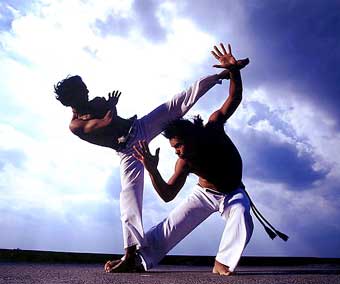
In Salvador, more than 80 percent of the population has African ancestry.  Whether in the faces of the people, the music, food, or religion, the influence of Africa pervades all of Bahian society and culture.  Black women wearing the traditional flowing white dresses and turbans sell traditional sweets and fritters (acarajé) on the streets of the old city center.  Hundreds of terreiros (houses of worship) carry on the centuries of religious rituals and beliefs that are a fusion of African religions and Catholicism known as candomblé.  The vibrant music scene has produced some of the greatest artists in modern Brazil from the popular music of Caetano Veloso and his sister Maria Bethânia to the samba-reggae of Daniela Mercury and Carlitos Brown.  Capoeira, a sort of combination of martial arts and dance moves, has developed over centuries in Salvador supposedly from its origins as staged fights between slaves.  Today, capoeira is practiced nearly everywhere on the globe (including Nashville).
Capoeira
Capoeira
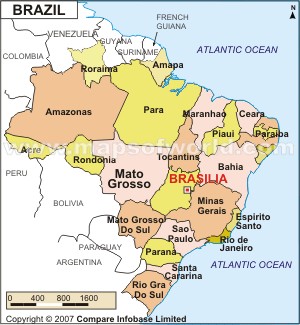
Each time I come to Salvador I am reminded of the incredible diversity of Brazil.  Moving down the coast to Southeastern Brazil, a large part of the population has African heritage, but Rio de Janeiro, Espirito Santo, Minas Gerais and São Paulo form a sort of transition zone from the largely black Northeast to the almost entirely white South.  The three southernmost Brazilian states (Rio Grande do Sul, Santa Catarina, and Paraná) were settled in the late nineteenth and early twentieth centuries by European immigrants and their inhabitants today are more than 80 percent white.  Northern Brazil and the Center-West region are made up primarily of whites or peoples of mixed European and Indian descent.  This enormous country is continuum of colors and peoples spread out across an area larger than Europe.  All across this vast terrain one can find Brazilians of African descent, but it is in Salvador that they are most concentrated and most visible.  Today, the influence of this epicenter of Afro-Brazil continues to exert enormous influence on music, dance, on all of Brazilian culture.  Salvador remains the soul of Brazil.map-of-brazil

3.9.09

Pelourinho - Capoeira


capoeira

I went running yesterday!! Hurrah! Don't worry Danielle, I went at 8am so there were lots of people around. I ran into another girl Laurel from the program, so we ran together for a little bit. She had been telling me how her host family sucked and that her host mom barely talks to her and doesn't make her feel welcome. I didn't realize how lucky I was with my family, but I really like them! They're soo nice, and they always include me in everything they do. My host mom always makes sure I'm not hungry (she'll ask me this even though I'll just have finished dinner 10 minutes ago), and my host dad always tries to teach me Portuguese.


At school, I got placed in the intermediate group! Haha I was pretty excited. The teacher, Carlos, is really nice and goes at a nice pace where I'm still being pushed. My friend Megan's also in my class, so that was fun to have her there. During lunch break, I ran home and changed into my swimsuit, then ran back out to meet Megan to go to the beach at Porto da Barra. We both didn't have phones, and I ended up being late because my host mom was so sweet and had asked her son's girlfriend (who sells swimsuits) to bring over some swimsuits for me to try on and see if I liked any of them! I was trying to tell them that I was going to be late to meet my friend, but my host mom was so excited and pulled out 8 different suits (all thongs) and wanted me to try them on. I finally got the message across that I had to go, so by the time I wen to find Megan, she had already left, so I went and took the bus (by myself!) and found some other friends at the beach.
[porto-barra-salvador.jpg]

Dear god, the water was fucking wonderful. The water was so clear and warm, I could have spent hours swimming around in it. I need to remember to bring my goggles next time so I can look at all the cool little sea creatures!! (I have such an obsession with tide pools and sea life) We swam around in the water, and then laid out for a little bit (tried to tan my white butt, but I think it sunburned a little) and then caught the bus back. The guys at the beach here are all super creepy. In the U.S. guys wolf whistle when they want you to look at them, but here in Brazil, they do this weird hissing thing that's really creepy. Some of them even touched me on the arm and hissed/said (probably foul) things to me in Portuguese. UGH gross.

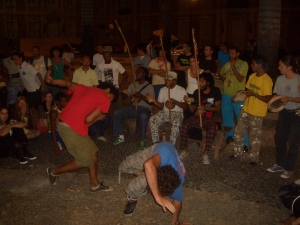
After our 2nd class, the whole program walked over to thecapoeira studio (!) and we listened to a lecture about capoeira for a while, and then got to see it performed. It is so fucking cool!! It's like this weird mixture of martial arts and dancing, and I absolutely loved it. The capoeiristas kick, punch, attack, and fake each other out, but they never touch their opponent. That's what makes it so hard, because you have to be constantly aware of how far you are from the person you're fighting, to make sure that you could hit them, but also that you don't actually touch them. Thecapoeiristas are so talented (and so muscular it's kinda ridiculous), and they led a little group exercise so we all got to try it. I was pouring sweat just after the warmup, and it got so intense so fast, I LOVED IT. Check out this link for a taste of what capoeirais like, but it's SO much cooler in person:http://www.youtube.com/watch?v=UJKR4cOt2Dc&feature=related


After capoeira, a lot of us went home and met up again at ACBEU to go out to Pelourinho. I didn't think I would, but someone told me there was live music on Tuesday nights, so I decided to go check it out. Some of us met at ACBEU, then walked over to McDonald's in between the three cities where most of us live:VitóriaGraça, and Porto da Barra. We then took cabs toPelourinho, which is a super cool place to go, but suuuper sketchy at night. I had met this kid Mike before during orientation, but I actually talked to him a lot on our way to Pelourinho, and he was super cool and funny. When we got to Pelourinho (taxi was only 3reais each!), there was a live band playing some weird (but really cool) Brazilian music. Everyone got drinks (minus me) and later went to dance in front of the band where there were lots of people already dancing. It was super fun! It was really different from IV, where parties are grinding-only, and it was fun to just dance and have a good time. There were Brazilian creepers everywhere, but the guys in our program were really good about watching out for the girls. When the music stopped, we all scattered and ran for taxis (apparently when the music stops, it's time to get the fuck out of Pelourinho because it's known for having shit go down) We took a taxi home, and Mike was really sweet and walked back to my house with me to make sure I'd make it back alive.

Even though I didn't drink, I still had a really good time. I didn't really think I was going to have fun tonight going out with people, because usually that entails taking shots of cheap vodka and getting wasted in some danky gross house with sweating people grinding all around you. Seriously, I hate IV parties, and I had so much fun tonight with cool people who didn't get wasted. People obviously drank a lot, but no one got shitty (sketch place + super drunk = you are completely fucked) and everyone was just out to have fun. One girl got tiiipsy and got her purse stolen. She lost her ID, phone, credits cards, and wallet. Sucks.

Today I went running again at 8am, and met up with Megan atCampo Grande and ran together for a little bit. Then we went home, showered, ate, went to school, went to the beach on our lunch break, and then went back to school. It was kinda sad because I dropped my stuff off at Megan's house when we went to the beach, and we thought that we told her host mom that we'd be back for lunch right before class started, but when we got back from the beach, we realized that Megan's mom didn't get the message and only set out one plate. I didn't want to be rude and just invite myself over (Clara told us not to just show up for meals, because the host moms like to be informed ahead of time so they can prepare more food or whatever), so I just went back to ACBEU and read some assigned reading for a while.

Our Afro-Brazilian Culture class is taught by an Afro-Brazilian woman, and she only speaks Portuguese, so we had a translator. It was really hard to pay attention and concentrate, because I would zone out while she was speaking and forget to listen when the translator began talking. Megan just started doing her homework, and I just ended up reading stuff out of the reader. I think the teacher and translator hate us and the people around us because we talk all the time, but next class we're going to try and sit closer to the front so we can actually hear and learn something. (We passed the time by picturing everyone in the program with cornrows)

After class, I went back home, changed, and met up with Megan, Cole, and some other people for capoeira class. We paid $60 reaisfor a month, and then got started. Capoeira is really difficult! (I knew this, but I didn't really think about how difficult some of their moves actually are) There were about 12 of us, and it was pretty funny during our warmup because we all kept running into each other. We practiced the ginga a lot because it's an essential move. It's kinda like a side to side dance while blocking yourself from harm. We then moved on to au (cartwheel things), front kicks, roundhouse kicks, and these drop-down lunge moves. I have theginga down, but everything else I need to work on. The class kicked my ass like no other, I haven't worked out that hard in ages, my entire body was sweating like crazy. My body's already feeling so sore, and it's only been an hour since I left the studio. It was like kickboxing/karate/dance class on crack and taught by really hot Brazilian black men. After class, we were all exhausted but excited about going back. I'm going to try and go back to the studio as much as I can. 


I love Brasil! I've been keeping really busy, and having a lot of fun meeting and getting to know people. I've definitely adjusted, and I haven't even been here a full week! I promise I'll post pictures soon.
Publicado no blog: The Chroni[WHAT]cles of Dchiao

30.8.09

Another city...... Off to Pelourinho

Another town!!

I flew into Salvador on Saturday after a few rainy days in Rio. It was nice to fly. I have some friends that I met in Rio and I roomed with them in Salvador that took the bus to save money. It cost them $240 Reals. The bus trip was supposed to take 25 hours but the bus broke down and the trip took 35 hours. I paid $291 Relas and it took me 2 hours. Ha ha!!

 After I found a bus, I arrived at my hostel and found the English couple that I was talking about above. It was nice to know someone there. There were also a big group of Israelis that were there to party no matter what. I spent my first day in a very old city in Salvador called PELOURINHO taking pictures, dodging beggars, and walking my butt off. It was a really neat place and at night it is full of fun. (See pictures of guys with drums) They do street parties where guys with drums play and get the crowds dancing and donating money. 

The band, Salvador, Brazil

Anyway, the first night we stayed in. The second day, my English friends moved out to another room and I got a new roommate. His name is Damien. He is English and came in with a long face. I asked what the problem was and he said that he had just broken up with his Brazilian girlfriend that day. I started to laugh and thought how ironic it was that he and I ended up rooming together and we both were just single from Brazilian women. 

Getting the crowd up for dancing, Salvador, Brazil

Next day, I went to the beach and hung out with the couple. In the evening, we went to a street party. My first night out in a while. We went to the town square and there was live music. In the smaller streets, there was a drum band playing. The crowd loved it. My roommate was pick-pocketed for about $40.00 bucks. We then went to an outside Samba bar and stood around and talked. I left at 12:30 am and went to bed. =)) More beach during the day and at night I cooked spaghetti for a few people and we stayed in. Next day, I cooked some food on the grill and headed out to catch a bus to the bus station. Lesson learned…………… NEVER get on a bus with a big suitcase at 5:00 pm in a city. The people pack in the bus. It is crazy. Lucky for me I had 3 older women felt sorry for me not speaking the language so they looked out for me and told me when to get off the bus. The problem was dragging my bag through the crowd. 

Street party, Salvador, Brazil

So, I climbed on a bus and headed to Recife. On the bus, I met a lesbian that was crying her eyes out because she was leaving her girlfriend in Salvador. A drunken guy speaking Portuguese also harassed me for a few minutes. I pushed him back 2 times but it was not a violent thing. I just moved him. The 2 girls next to me did not know what his problem was. Finally, the man behind me (I think he was military or a federal police man) got up and twisted his arm and moved him back to his seat………… Good times!!!! 


Relato de Ccajoleas do blog Travelpod

In the Pelourinho - Uma Americana no Brasil


In the Pelourinho

Salvador_Pipa kid

Menino soltando pipa. Kid flying a kite. Pelourinho, Salvador, BA.

The historic center of Salvador, the Pelourinho, is situated on a hill that forms the “upper city”; the “lower” being the port and markets. Back in the day, the port, situated on Bahia de Tudos os Santos, was incredibly busy with importation of enslaved Africans. Salvador used to be the capital of Brazil once upon a time, so it was the main port for the African diaspora.
Salvador_Angoleira Roda
The Pelourinho was (reportedly) where slaves were purchased and sold, and, as some reports claim, publicly punished at times. Today, it is a UNESCO world heritage site, tourist destinação, and hub for capoeiristas, percussionists, and Brazil-lovers alike. Even Michael Jackson filmed the video to “They don´t really care about us” in the Pelourinho, with help from percussion school, Olodum.
Salvador_MichaelJackson remake

Apparently Michael Jackson still haunts the place…
…just kidding, just kidding. It´s just Mario. Tranquilo.
Relato do Blog: 

Uma Americana no Brasil

24.8.09

Reflexões: Be Slow to Judge - The trickiness of race and class

Texto de Mariama White-Hammond
http://mariamastrippin.blogspot.com/
Foto:Natan's Piva Page
http://tinyurl.com/mkc3dd


Be Slow to Judge - The trickiness of race and class

Last night I went out for my last walk through Pelourinho before my early flight for this morning. On my way to say goodbye to a friend I ran into a couple that was struggling with very limited Portuguese to find a 24-hour ATM. I stopped to do a little translation and then gave them some recommendations for how they could stay safe late at night.

After running some of my last errands I ran into them again and they invited me to have a drink. I was in a hurry to get to a 2nd birthday party for a friends son so I could not really join them but the man mentioned that Salvador was not what they had expected. He commented that the worlds seemed so “separate”. While I have known that Brazil can be a very segregated place, I had gotten pretty comfortable and had stopped noticing the fact that Pelourinho is the downtown center of African descendants while other popular hang outs like Rio Vermelho and Barra are much lighter. You see white people around Pelourinho, but they are mostly tourists – not elite Bahians. In contrast, my one experience at a bar in Barra had me feeling pretty dark.

The couple was from New York and LA and they were more used to living in a diverse world. I think they had heard the official Brazilian line that there was not racism and maybe they though there was no classism either? Or maybe they thought that Pelourinho would be gentrified at this point – I mean if it is a major tourist attraction that must mean good property values and plenty of yuppies to flood in and buy up the great historical houses. Isn’t that how it gets down in Harlem or the South End? Or maybe they thought it was like LA where the parties have people of all colors and it feels like you are living in the world as it should be, while not thinking about the folks living under highway overpasses or children dying on the streets of Compton.

The reality is that we live in a world where racism and classism still exist and in many ways they are deeply connected. A conversation with another Brazilian reminded me of the importance of remembering that we must confront both of these oppressions not privileging one over the other.

So instead of having this deep conversation with the guy, I told him that he would probably have a better time in Barra. I couldn’t really name any good places (since Barra is not really my cup of tea) but he said he would consult his Lonely Planet for suggestions. As we said goodbye I wished that I had a minute to talk because I could tell that this issue had made him pause to think and we could probably had an ample discussion about the very things I reflected on. However, I had a party to get to and friends to say goodbye. So I left feeling like I didn’t have time to get deep with him.

I could close the blog here with me being the omniscient expert on race and class, but this morning I was riding on the bus to the airport. I felt proud of myself for not needing to take a $35 taxi and for knowing the city well enough to get on the $2 bus. I felt very baiana (the term for a woman from the Bahian region) and I looked forward to my last glimpse of Salvador being along the beach route of the bus rather than the highway route that the taxis take.

As I looked out the window at the beach and the waves crashing I saw so many people out walking and running along the beach. I felt a pang of guilt that I had not done any running while in Salvador and I realized that I would have to train that much harder to get ready for my half marathon in October. I remembered that part of the reason that I didn’t run is that the area where I stayed was not close to the beach. Things could get a little sketchy at night and I didn’t think it that safe to run at night or even maybe in the morning and definitely not with my Ipod.

I have been thinking about the possibility of living in Salvador in the future and for a moment I thought about how great it would be to be able to live close to the beach, have a great view and be able to run along the beach every morning. My husband has been mentioning that he is tired of living in a city so I know he would much prefer to be close to the ocean in a relatively quiet area where it was not too loud at night. It would be great.

But then I had a quick panick moment when I realized that there were not too many Black folks living in the areas and that if we were to move to Barra or Ondina everytime I was in the hood and people asked me where I lived there would come that moment spoken or unspoken when we would realize the major class difference between us. As a activist who works with folks who are sometimes struggling to get by this moment of class distinction is awkward for me. It is that moment when a child who might be impressed by my confidence or the way that I talk or my ideas suddenly feels that those things are unattainable because they won’t have access to the middle class family I grew up in or to the private high school or elite university where I was educated. It is in the quick moments that I feel my own privilege and sometimes I see folks sink back into their own “disadvantage.”

So before I am judgemental of this guy I had to reflect on myself. On my own desire to live in a safe neighborhood where I can run outside, get healthy food and appreciate nature. While my life mission is to build a world where everyone has access to those things, the reality is that world will probably not come in my life time. So until then – what do I do about the fact that sometimes I want to have a nice space and not live on top of 50 people and worry about my kids – and on the other hand I want to live in solidarity with the same people I am fighting with. I have seen how the flight of Black middle class has been part of the deterioration of so many Black communities around the United States. I have at times been angry with those folks when I was living in my neighborhood and we were the only kids outside whose parents were professionals and I felt like one example was not enough to balance the parents who had to work 3 jobs to make ends meet or had given up trying and were just living on welfare.

I don’t pretend to have answers I just realize how complex the situation is. In the Black community in the United States I think we get used to holding up the banner of racial solidarity so we don’t have to deal with issues of class, but I guess Brazil has made me see in an even more concrete way how much the two are connected. So I am glad that I don’t have the answer right now, but I guess I do wonder – am I committed enough to liberation of my people that I would be willing to live in a favela? Would people living in the favela think that was just being foolish? Would it make more sense for me to use my privilege to deal with and challenge those folks who are removed from the reality of poverty? If you have any answers, or even more questions – feel free to leave a comment.


Foto: Farol da Barra de Helio Queiroz

Pelourinho e a Bahia por Guillermo Altclas

Este artista argentino têm uma serie de desenhos retratando o Pelourinho e a Bahia que são simplesmente maravilhosos.
Vale a pena uma visita ao seu blog para apreciar estas verdadeiras obras de arte.
[ENTRADA+OSCURA.jpg]

[vidriera.jpg]

Guillermo Altclas


mirala y recomendala

23.8.09

Pelourinho - Ah Bahia !


Ah Bahia!

Das alturas, Joel pesquisa as ruas. Os olhos mergulham nos decotes das baianas que passam. Joel da-me cotoveladas. A cara, ainda carregada de borbulhas adolescentes, ri de entusiasmo hormonal. Sento-me com ele e ficamos a janela em descarada contemplação.
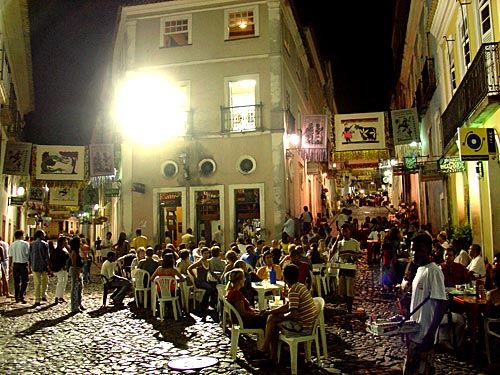
As pessoas caminham nas ruas empedradas de Historia e o caminhar ganha um balanço irregular - o balanço doce de Salvador. O gingar ao subir as ladeiras ingremes. O cuidado ao descer na volta, os braços abertos e os pes a travar os chinelos que escorregam nas pedras polidas por muitos anos. Estas ruas têm a cultura da mistura de culturas. É a irreverencia das pretas baianas, dos folhos coloridos em contraste com a pele escura, saias e saiotes, verdes encarnados azuis amarelos brancos de ferir os olhos, cores fortes fortes fortes. Fartas mulheres, fartos braços, fartas pernas que dançam ao som dos berimbaus, o som da batida dos tambores das rodas de caporeira, do suor que salpica dos troncos musculados, os movimentos tesos de força, o suor que cai no chao e escorre pela calçada branca. Debaixo das saias, as pernas mexem-se ao som do maculelê, do cadomblê e dos orixás, nessa fé herdeira dos escravos pagãos do Pelourinho (Pelô, para os mais intimos) e dos europeus colonizadores, cristãos sobretudo, que espalharam as suas religiões em sumptuosas igrejas de talhas douradas e santos divinizados. Mexem-se com o Elevador Lacerda que sobe e desce em Arte Deco e liga a cidade alta e a cidade baixa a todas as horas que somam um dia. Ao som do Mercado Modelo e do seu intenso comercio. Das ondas que rebentam nas praias que vêm ver o por do sol na Baia de Todos os Santos. As praias que vão da Igreja do Bonfim até à Barra, onde se erguem os fortes e farois da cidade, mas depois do farol ha mais praia, praia até mais não, é Itapuã onde é bom "passar uma tarde em Itapuã, ao sol que arde em Itapuã, ouvindo o mar de Itapuã, falar de amor em Itapuã". Os pintores que preenchem telas em pinceladas pouco originais, mas ainda assim tão apelativas. As filmagens de mini-series, os cabos que passam, as camaras que passam, as equipas que passam, a produção que encontra nestes cenários a evocação de outros seculos. As pernas das baianas dançam debaixo das saias, na antecipação das noites de terça-feira, a noite em que tudo e possivel, noites de Olodum e Ilê Aiyê e loucura hedonistica. Movem-se com os raspadores que raspam as ervas que crescem nos passeios. Os pedintes que forçam olhos tristes e lagrimas que caem de forma estudada, seguem os turistas que se ajoelham para fotografar uma imagem que so foi fotografada umas outras milhões de vezes, numa diferença de riquezas que nao deixa indiferente. É o Jorge Amado à conversa com Dona Flor à porta da Igreja de S. Francisco. As baianas dançam porque em Salvador da Bahia tudo vibra numa musicalidade que permeia os dias e as noites e nao descansa. Contagiante! As baianas dançam porque sabem que nao podem não o fazer, não há como resitir.

Joel bate o pe. Tambem ele nao resiste. Dá-me uma cotovelada e deixa cair o olhar que se aninha em mais um decote saltitante.
Ah Bahia!
Bahia, Bahia, Bahia, Bahia, Bahia...
Viva os amigos com maquinas que ainda trabalham e permitem mandar um cheirinho da viagem até casa!
As baianas do Terreiro de Jesus, pleno centro do Pelourinho

A terça-feira a festa é de loucura. O video e demasiado pesado para carregar, mas garanto o suor e calor desta noite!
Israelitas donos de pizzarias e vinhas; Ingleses que sem trabalho por causa da crise resolvem nao ficar deprimidos; mais israelitas, cientistas na area do cancro da pele em Boston, com um phd em Harvard debaixo do braço e uma jovialidade aos trinta e cinco anos que deixa arrumados muitos de nós com vintes; sociologos alemães, australianos das artes, brasileiros da capoeira - nos nossos dias o mundo e pequeno, mas cabem nele pessoas tao diferentes e que vale mesmo a pena ouvir, conhecer!

21.8.09

Passeando pelo Pelourinho

Após visitar o Mercado Modelo em Salvador, onde encontrei uma enorme diversidade de artesanato baiano, bolsas, quadros, enfeites para a casa, panos de prato, vestidos, cocada e chaveiros com fitinhas do Senhor do Bomfim, atravesso a rua para pegar o famoso Elevador Lacerda. Pago uma taxa simbólica de cinco centavos e paro atras da última pessoa da fila para entrar em um do dois elevadores de 72 metros de altura que ligam a Cidade Baixa da Cidade Alta, onde fica o Pelourinho – o mais antigo e famoso bairro da cidade. Logo que chego na parte de cima, avisto a Praça da Sé e vejo prédios antigos, muitos precisando de uma boa pintura.


Vendedores ambulantes oferecem insistentemente seus produtos, são colares e chaveiros. Um menino moreno chega perto de mim e coloca uma fita do Senhor do Bomfim no meu pulso, em troca ele quer qualquer quantia em dinheiro. E assim como ele, há vários por lá. Há poucos metros dali vejo a cidade lá embaixo, o trânsito intenso, o mercado com suas bancas de artesanato em frente, e a Baía de Todos os Santos, com uma cor azul esverdeada, imagem digna de um cartão postal. Barquinhos, o prédio bem conservado da Marinha, e muitas pessoas transitando lá embaixo na Praça Cayru. Ao meu lado está a Cruz Caída, monumento conhecido na capital baiana. Ela foi instalada no lugar onde existia uma igreja em ruínas. Quando a igreja foi retirada para reformar a Praça da Sé, foram encontrados ossos no local. Um menino que estava perto de mim explica que logo a minha frente numa espécie de canteiro haviam muitos ossos antigamente. Mesmo estando há pouco minutos no local, já dá para sentir seu valor histórico e impactante.

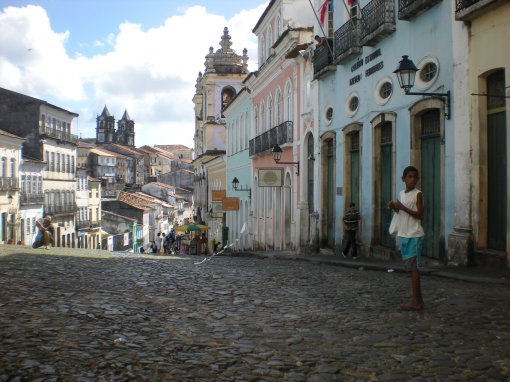
Mas a visita ao Pelourinho está apenas começando. Caminho um pouco mais sobre os paralelepípedos e ladeiras de ruas estreitas ao som de MPB, pois há diversas lojas de venda de CDs e instrumentos que ligam suas caixas de som num volume agradável colaborando para a contextualização do local, bem brasileiro. Além dessas lojas, há outras de artesanato baiano, roupas, artesanato indiano, restaurantes, bares, agências de turismo e papelarias. A arquitetura barroco-portuguesa, com cores fortes e diversificadas encanta os inúmeros turistas, que encontra a cada cinco minutos, uma igreja, muitas com arquitetura barroca e imponente. As baianas com suas vestimentas tradicionais convidam para uma foto, paga, é claro.Sento numa sorveteria de origem francesa próxima a outros turistas. E ao descansar da caminhada abaixo de um sol de 27 graus em pleno inverno soteropolitano, leio um guia de turismo de Salvador e deparo-me com a história do Pelourinho. Nele diz que este foi o primeiro bairro de Salvador, a primeira capital do Brasil, ou seja, onde tudo começou em nosso país. A palavra “pelourinho” identificava o lugar dos engenhos reservados para castigar os escravos. Tudo muito didático, porém necessário para entender aquele local histórico e cheio de cultura ainda viva , mesmo após 1549, quando Salvador foi fundada por Tomé de Souza, primeiro Governador Geral do Brasil.

Unesco World Heritage Site, Salvador de Bahia


After another overnight bus, we arrived in Salvador de Bahia famous for preserving traditional Bahian culture, samba music, the martial/dance art of capoeira, Rastafarian religion and for the worlds biggest party known as Carnival!!

We arrived early around 6am then took a cab to Hotel Estrela in Pelourinho, the historic district of town. Pelourinho means whipping post in Portuguese and the location was a major slave auction port outlawed in 1835. When we arrived we were greeted by an incredibly nice receptionist who had been working at the Hotel for over 14yrs and learned English by watching movies!!

Due to the dreary rain I took a 3-4hr nap and John drew a beautiful church dome (Igereja da Misenicordia) that was just outside our bedroom window. The view from our hotel was incredible. From the terrace we could see Praca de Se with Catheral Basilica, Praca tome de Souza, Terreiro de Jesus, and Cruzeiro de Sao Francisco. Around 11am we ventured out into the city where we were immediately approached by street people of all ages asking for money, food etc. Due to the heavy rain we quickly made it to a nice restaurant called MamaBahia where live music was
Artist with backward guitar
MamaBahia Restaurant
being played by a musician whose guitar arm was inside the body of the guitar. Very interesting.

MORE interesting than that was what happened on our way back to the hotel. As we were making our way along the sidewalk there was a man walking toward us. He was around 50 and was wearing nothing but a man's bikini bathing suit. No shoes, no hat and the rain was freezing. It was obvious he was a bit off his rocker. Instead of walking across the street to the other side we continued to walk towards him not thinking he'd notice two gringos in bright red raincoats. John walked past him with no problem, but as I looked up the crazy man and I made eye contact! Oh shoot! Immediately he threw up his arms, screamed and started running at me. I made it across the street but not in enough time to avoid the heavy punch that the crazy grape smuggler threw at me. I was terrified!! After the punch the crazy man continued running down the street. The punch apparently relieved him of whatever pissed him off. Thank goodness!!! I thought I was going to have to wrestle
Gorgeous Church
Gorgeous Church
Igreja e Convento Sao Francisco
with a half naked crazy man for my life!! (John: It all happened so fast in the pouring rain. I heard a man scream, which startled me but I honestly didn't think much of it and only a second later heard Chrissy yell! I turned around to find her running in one direction with her arms shielding her head and the crazy man running away in the other. My first thought was he had only scared her but after catching up with her and realizing what had happened the man was long gone. The incident definitely was a wake up call, we were really lucky, things could have been much worse. We are continually approached by street people and have become quite used to it, but since then our guard has been up and we are more cautious of the crazies that we keep crossing paths with.)

After that nonsense for the remainder of the day we stayed close to our hotel. We spent the evening enjoying a few drinks at the neighboring restaurant, where the owner fed the local street people to keep them at bay. As if the day events weren't enough, we watched drug exchanges, prostitutes,
homeless people, and wild cats and dogs take over the streets. We quickly realized that although Pelourinho's cobbled streets and colorful houses are the safer areas of the city, it's not a place to be explored at night. Lucky for us we didn't have to walk far and were relieved once we were inside our guarded hotel. Fun stuff.

We also encountered a young boy of about 12-13yrs who lived on the street. He spoke excellent English and every time he saw us, asked for food. We tried to give him money for food, but later found out that he was so addicted to drugs he knew that he would only spend money on the addiction. So after a day of meeting him we bought him a giant hot dog but he made a scene when we didn't buy him a drink as well! Crazy huh?

The next few days we really enjoyed Salvador. We visited Igreja e Convento Sao Francisco a GORGEOUS golden church, Moderna Meracado a fun market, and did various shopping throughout. Awesome jewelry, art stores, Capoeira dancing everywhere, and lovely decorated ladies!! So much artistic talent to see. One evening we went to Museu
de Art Moderna to see a Jazz Jam. (Recommended by folks at Cafe Zuma... great place as well). Various artists from around the city got together and just jammed! Most interesting was random artists who broke out with flute tunes and freestyle rap with the famous jazz tunes of Miles Davis, John Coltrane and much more. Also there was a local drunk with a giant umbrella dancing for the band and audience.

The original plan was to head north to the Amazon River and do a boat/river float. After talking with various people and after serious evaluation of time we decided to skip the float. From what we learned you spend 5 days floating on a giant boat with hundreds of other people and you do not see the wildlife you would expect. Sooo... we decided to fly to Bogota, Columbia.

At 4:00am the next morning, we grabbed a taxi to the airport and were delighted by the roller skating security guy, whistling a tune as he gracefully whizzed past! haha


Church and Convent of Saint Francis
Catedral Basilica de São Salvador
Old Sun Dial
Old Sun Dial
Church and Convent of Saint Francis
Chess Burger anyone?
Our favorite dive
Love those old cathedrals
Igreja e Convento Sao Francisco
Jazz Jam
Jazz Jam
Museu de Art Moderna
Great view of Bay
Great view of Bay
Moderna Meracado and Forte Sao Marcelo